Sports Reconditioning in Barcelona

Sports reconditioning · Barcelona

Return to competition with a phase-based plan and clear criteria

From the table to the field: pain control, strength & motor control, impact tolerance, and minutes-controlled return (RTP/RTS). First visit 60’; follow-ups 50’.

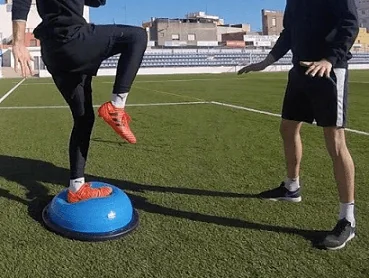
Sports reconditioning in action

What is sports reconditioning and who is it for?

The bridge between physiotherapy and performance. We design the progression to resume training and competition safely.

Pain ≤ 2/10

Pain/irritability under control and tolerance to basic tasks.

Strength & control

Asymmetry < 10% in key tests and stable technical pattern.

Impact & sport-specific skills

Impact, jumps and change of direction without flare-ups.

RTS / RTP

Minutes-controlled return and stable performance in training.

We work with runners, football/padel, cross/strength, basketball, cycling/tri and fitness tests.

Reconditioning phases

Progression with pass criteria to avoid setbacks.

Phase 0 · Pain control

  • Education, load management and non-forced analgesia.
  • Specific activation and mobility.

Phase 1 · Strength & pattern

  • Isometric/eccentric strength + lumbopelvic control.
  • Technical patterns (hinge, lunge, push/pull).
  • Pass: asymmetry <10% in key tests.

Phase 2 · Impact & change of direction

  • Low→moderate plyometrics, steady runs and intervals.
  • Acceleration/deceleration and COD drills.
  • Pass: impact/jumps without flare-ups.

Phase 3 · Minutes-controlled training

  • Minutes progression + position-specific tasks.
  • Volume/RPE.
  • Pass: stable performance across 2–3 microcycles.

Phase 4 · Competition

  • Discharge with documented RTP/RTS and prevention plan.
  • Re-assessment and performance goals.
  • Follow-up: 4–6-week review.

Plans by injury

We tailor load, impact and skills to your condition and sport.

Muscle strain

  • Isometric → sport-specific eccentric strength
  • Return to sprint with progressions
  • Sprint criteria and pain 0–2/10

Tendinopathies

  • Isometrics/eccentrics + EPTE®/shockwave when appropriate
  • Jump/impact sport-specific skills
  • Load and RPE control

Ankle sprain

  • Proprioception and stability
  • Impact and change of direction
  • Return-to-train with minutes

ACL / Meniscus (post-surgery)

  • Quadriceps/hamstrings strength and control
  • Progressive plyometrics and COD
  • RTP with functional test + report

Stress fracture

  • Impact and volume management
  • Stage-based return-to-run
  • Education and prevention

Athlete’s spine

  • Lumbopelvic stability and strength
  • Skill progression (lifting/running)
  • Maintainable prevention

You may also like: Sports physiotherapy, Plantar fasciitis, Tennis elbow, Low back pain.


Coordinated work

If you have a coach, we share the criteria and weekly progression.

  • Report on current phase and pass criteria.
  • Weekly plan with volume, % load or RPE.
  • RTP/RTS checklist and prevention.

Sports rehab · Objective assessment

Strength & vertical jump assessment (elite-level), now within your reach

Objective data to return to performance, prevent setbacks, and train more safely.

Strength and vertical jump assessment in sports rehab

From the treatment table to performance

From “I feel fine” to “I’m ready”

We measure strength, power, asymmetries, and fatigue to guide your RTP/RTS with clear criteria.

This assessment turns your recovery and training into a measurable process. We detect “invisible” deficits, adjust loads, and help you avoid returning too soon.

Safer return Fewer setbacks Load control Fatigue under control

What is this assessment and why it matters even if you’re not a pro?

These are strength and vertical jump tests used in elite sport to make data-driven decisions: what’s still missing after an injury, when to progress, and how to reduce setbacks. If you train, compete, or want to prevent injuries, it helps you fine-tune your work with precision (not guesswork).

Objectivity Finds deficits even when there’s no pain.
Clear decisions Increase load, maintain, or deload.
Prevention Asymmetries and fatigue before problems appear.

What we measure (and how it helps you)

The goal isn’t “doing a test” — it’s using it to guide your plan.

Sport-specific strength

Your real capacity to handle your sport’s demands.

  • Post-injury deficits
  • Control and stability
  • Load progression

Power (force × velocity)

Explosiveness: accelerate, jump, change direction.

  • Sprint and acceleration
  • Jumps / COD
  • Return-to-play “pop”

Asymmetries

Left–right differences that increase compensation.

  • Fewer setbacks
  • Better load distribution
  • More stable return

Vertical jump

A quick “snapshot” of neuromuscular status and global power.

  • Impact readiness
  • Performance tracking
  • Fatigue signals

Consistency

How stable you are when repeating efforts.

  • Attempt-to-attempt variability
  • Motor control under load
  • Fatigue-related risk

Interpretation + plan

We turn numbers into decisions and exercises.

  • What to improve first
  • How to dose load
  • When to progress

Why it matters in your sport

Every sport stresses the body differently. We measure what best relates to performance, load tolerance, and setbacks in your case.

Football / Futsal+

Sprints, braking, cutting, and contact. If power is lacking or asymmetries are present, compensation increases and so does setback risk.

  • Power to accelerate and repeat sprints
  • Asymmetry control during high-intensity actions
  • Fatigue tracking in match-heavy weeks
🏀Basketball / Volleyball / Handball+

Lots of jumping and landing. Power, control, and impact tolerance are key for performance and injury prevention.

  • Jump power and neuromuscular response
  • Asymmetries that affect landing mechanics
  • Fatigue detection when jump metrics drop
🎾Padel / Tennis+

Constant direction changes and dominance bias. Measuring strength/asymmetries helps distribute load and reduce overuse.

  • More efficient braking and lateral pushes
  • Asymmetries that overload knee/hip
  • Fatigue: worse control and more “tweaks”
🏃Running / Trail+

High impact and high volume. Small asymmetries repeated thousands of steps become overuse; strength improves economy and tolerance.

  • Strength base to protect knee/ankle/Achilles
  • Detect meaningful asymmetries
  • Cumulative fatigue: neuromuscular drop
🏋️Cross / Hyrox / Competitive fitness+

High volume + intensity. Tracking power/consistency helps decide when to push, maintain, or deload before overload hits.

  • Load control (not always “maxing out”)
  • Fatigue signals: power/consistency drops
  • Overuse prevention through smarter dosing
🚴Cycling / Triathlon+

Long seasons and sustained positions. A balanced strength base protects knees/back and improves load tolerance.

  • Balance and strength to sustain output
  • Asymmetries that overload knee/back
  • Fatigue: loss of peak output and consistency
🥋Martial arts / Combat sports+

Short accelerations, instability, impacts, and rapid changes. Power and asymmetries influence striking, takedowns, and stability.

  • Power for entries, throws, and strikes
  • Dominance-related asymmetries (compensation risk)
  • Fatigue: reduced reactivity and postural control
🏊Swimming+

Low impact but very repetitive. Strength/control help prevent overload (shoulder/neck) and improve starts/turns.

  • Strength and control to reduce overuse
  • Power for starts and turns
  • Fatigue: lower start/turn output and control
⛷️Skiing / Snowboarding+

High eccentric forces and leg fatigue. Measuring strength/power helps prepare the knee and manage risk when control drops.

  • Eccentric strength and knee stability
  • Between-leg asymmetries
  • Fatigue: worse edge/control and higher injury risk
🧗Climbing / Bouldering+

Strength peaks and coordination under fatigue. Asymmetry/power control helps protect shoulder, elbow, and core in explosive moves.

  • Useful strength and global control (core/stability)
  • Asymmetries that drive compensation
  • Fatigue: less precision and more tendon load
🥅Physical tests / Police & firefighter entry tests+

Volume build-up and specific tests (jumps, running, drags, circuits). Measuring lets you train what you actually need and arrive fresh.

  • Test-specific plan (not generic)
  • Fatigue control in key weeks
  • Avoid injuries from rapid load increases
🏑Hockey (field / roller)+

Low stances, braking, and cutting. Power and asymmetries matter for speed and for protecting adductors/knee.

  • Power for starts and braking
  • Dominance/stick-related asymmetries
  • Fatigue: poorer braking and higher adductor load
🏉Rugby / American football+

Contact + short accelerations + cutting. Measuring strength/power improves impact tolerance, first-step speed, and reduces hamstring/knee risk.

  • Strength for contact and stability
  • Power for first-step speed and tackles
  • Fatigue: technique drops and contact risk rises

Injuries where it helps most (and why)

Especially useful when pain is controlled but performance is still missing or setbacks keep happening.

1Knee (ACL / meniscus / anterior knee pain)+

After injury or surgery, deficits and asymmetries can persist even when pain is under control.

  • Quantifies deficits and imbalances
  • Guides progressions to jumping/COD
  • Reduces the risk of returning too soon
2Hamstrings+

Sprinting demands fast force; if power is missing, setbacks are more likely.

  • Power control for return-to-sprint
  • Safe high-speed progression
  • Asymmetries that drive compensation
3Tendinopathies (patellar / Achilles)+

The key is dosing load: not too little, not too much.

  • Volume and intensity adjustments
  • Controlled return to impact/jumping
  • Objective progress tracking
4Ankle / foot+

Stability and impact absorption are critical for jumps and cutting.

  • Power and control deficits
  • Progressive return to landings/COD
  • Avoid compensation into knee/hip
5Groin/adductors and spine+

Often driven by strength/stability deficits and compensations.

  • Identifies relevant limitations
  • Guides useful strength and control
  • Improves load tolerance

Fatigue: what it’s for (and how it protects you)

Neuromuscular fatigue reduces your ability to produce force/power. If load isn’t adjusted, injury risk rises and performance drops.

What we see

  • Drop in power / explosiveness
  • More variability between attempts
  • Asymmetries that appear or increase

What we decide

  • Adjust volume and intensity
  • Deload or change the stimulus
  • Avoid the “risk zone”

When it matters most

  • Match-heavy or high-load weeks
  • Return after injury or time off
  • When you feel heavy or lack “pop”

How we integrate it into your rehab

Test → plan → re-test → RTP/RTS criteria.

Initial test

An objective snapshot of strength, power, asymmetries, and neuromuscular status.

Sport-specific plan

Work tailored to your injury and your sport’s demands.

Re-test

We confirm progress and adjust load so you keep moving forward.

RTS / RTP

Return with clear criteria + a sustainable prevention plan.


What you get (deliverables)

You leave with a roadmap you can apply to training and rehab.

Clear report

Key results explained in plain language.

  • What it means for your sport
  • Deficits and priorities
  • Main recommendations

Action plan

Exercises and progressions aligned with your goals.

  • Strength / power / control
  • Impact/COD progression
  • Setback prevention

Follow-up (if needed)

Re-test comparison to validate progress.

  • Objective change over time
  • Load adjustments
  • Coordination with your coach

If you have a coach, we share criteria and weekly progressions (volume, intensity, and fatigue-based adjustments).

Hours
Mon–Fri 9:00–14:00 · 15:00–21:00 · Sat 9:00–13:00 (by appointment)
Physiotherapy clinic. The information on this site does not replace an individual clinical assessment.